Types of lenses for glasses: A guide for those perplexed by specs

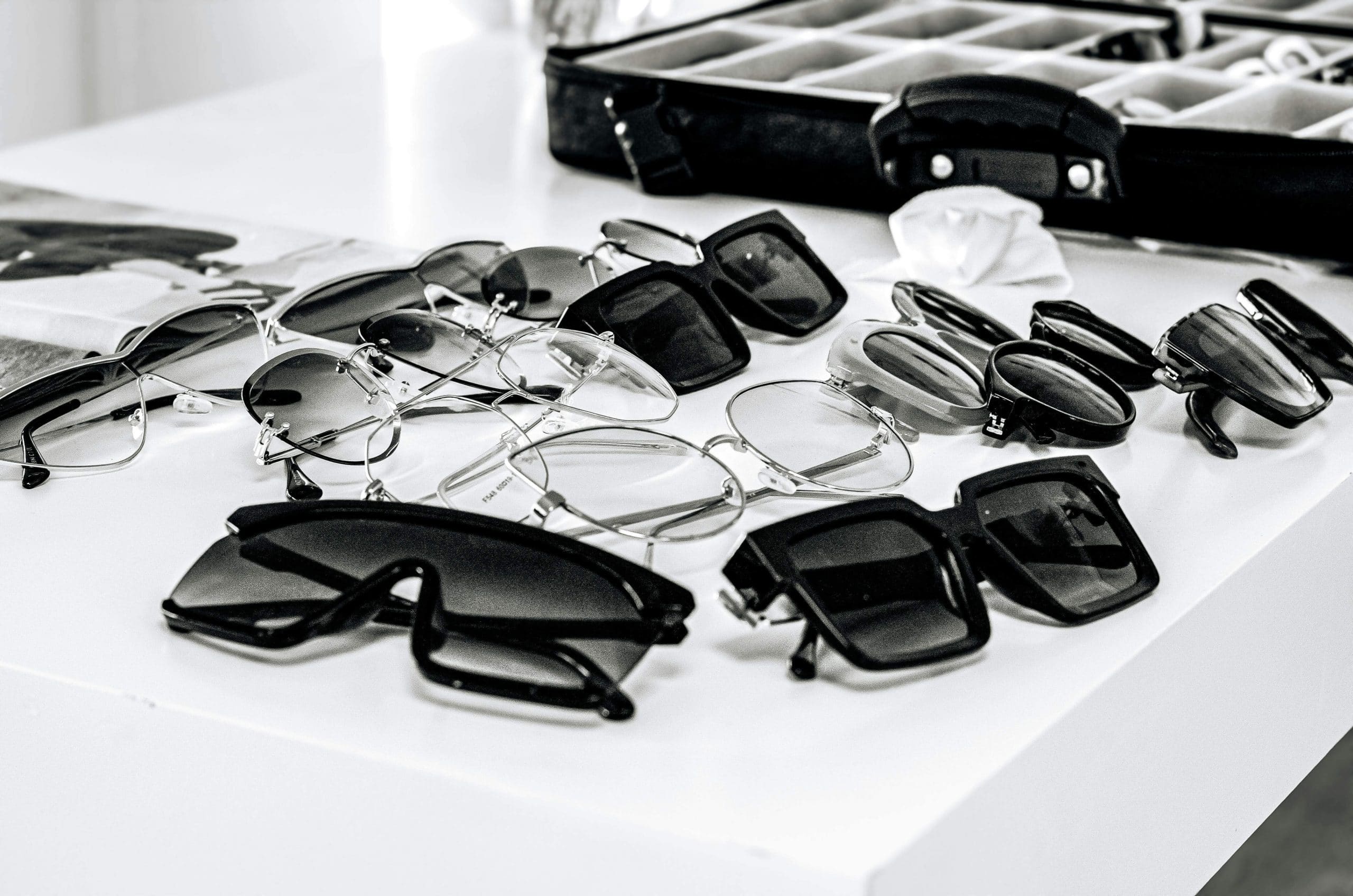
Black-and-white image of various glasses and sunglasses scattered on a desk, representing the different types of lenses for glasses.

With so many different types of lenses for glasses, how do you know which to choose? Photo by Paul Espinoza.

You’re shopping for glasses or replacement lenses, and you’re faced with a bewildering array of choices. Single vision, bifocals, varifocals, thin-index, photochromic lenses… You need some kind of dictionary to understand all this! Well, here it is. Your handy guide to the many different types of lenses for glasses.

How do you know which type of lens to choose?

The type of lens you need depends on your prescription, your preferences and your daily life. Using the right prescription is a safety concern for some activities, like driving. Other features solve problems for you, like reducing scratches or glare. The type of lens you should choose depends on how you spend your time and which issues with glasses affect you the most.

The three main types of prescription lenses for glasses

Single vision lenses

These lenses correct your vision and match your prescription. They’re your basic glasses. Distance glasses have single-vision lenses to help you see far away if you’re short-sighted. Reading glasses have single-vision lenses to help you see close-up if you’re long-sighted. See our single-vision lens prices.

Bifocal lenses

These have two zones: a long-distance zone at the top and a near distance zone at the bottom. There’s a line in the glass between them.

Varifocal lenses

Also called “multifocal” and “progressive” lenses, varifocals blend multiple prescriptions in the lens. Typically, the top of the lens helps you see distant objects more clearly, the middle lets you see well at arm’s length and the bottom lets you see close-up. There’s no line between the zones. Read more on bifocals vs. varifocals.

Specialist varifocal lenses

Occupational lenses

These optimise the different zones in a varifocal lens for specific tasks, such as working in an office.

Office glasses

Office glasses have a wide close-up and intermediate zone in the lens to help you with reading and working on a computer. See our Digital Office Lens prices.

Anti-fatigue lenses

Anti-fatigue lenses are distance lenses with a small magnification zone for close-up reading. Read more about anti-fatigue lenses. Read more about occupational lenses.

Driving lenses

Some brands offer varifocal lenses that balance the near, distant and intermediate zones to be best for driving. Read our driving glasses guide.

Tinted lenses

Prescription sunglasses

These are sunglasses, made to match your prescription.

Photochromic lenses

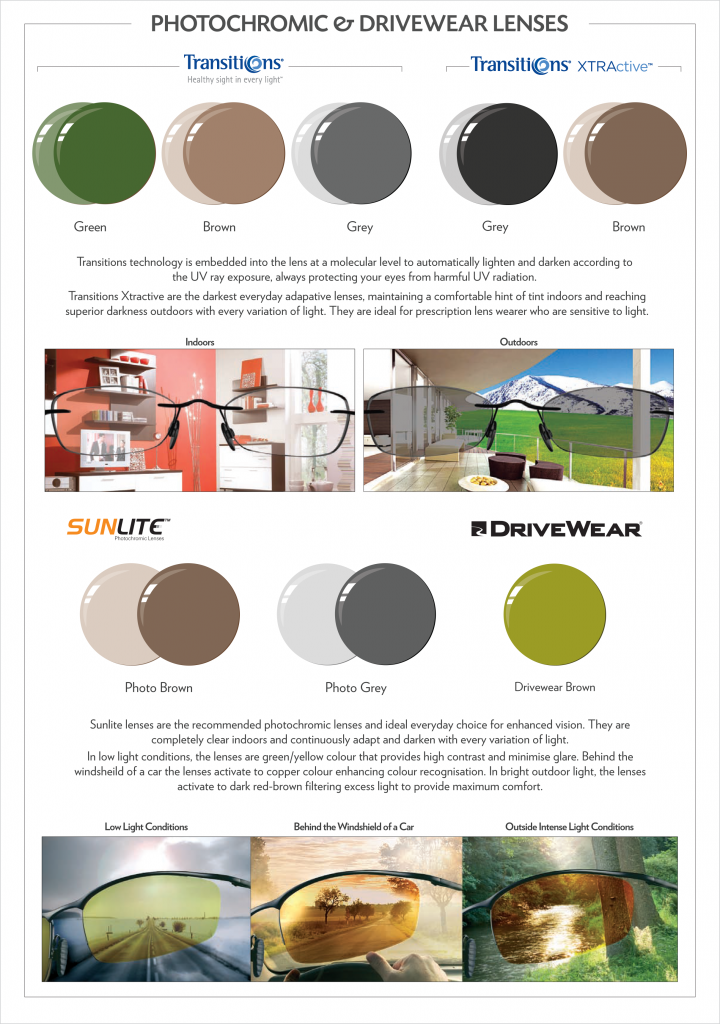
These change colour based on the light conditions. They turn dark like sunglasses in bright light. They turn clear like normal glasses in dim light. Transitions lenses are a brand of photochromic lenses. Read more about photochromic lenses.

Polarised lenses

These reduce glare by filtering horizontally polarised light that reflects off surfaces such as water.

Other tinted lenses

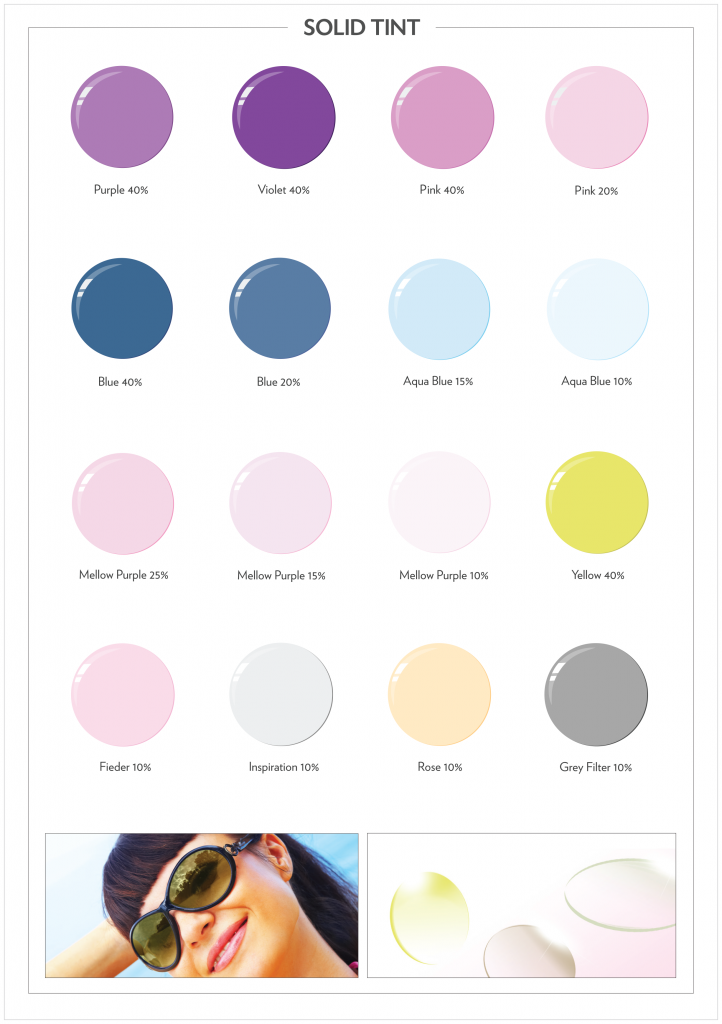
You can buy lenses in almost any colour. Some are more for fashion; others work as sunglasses to protect your eyes from UV rays. See our range of tinted lenses.

Lens thicknesses

Usually, a stronger prescription will need a thicker lens. But you can buy thinner lenses that still manage to match a stronger prescription because they bend the light more efficiently. These are called “high index” lenses.

Lens coatings

These are usually add-ons you can pay for on top of your lenses.

Anti-scratch lens coatings

These protect your lenses from scratches.

Blue-light filtering lens coatings

These limit blue light, including from screens.

Anti-reflective coating

Anti-reflective and anti-glare coatings stop you being dazzled by light reflected off surfaces or car headlights.

Hydrophobic / oleophobic coatings

These reduce smears on your lenses from water and oil.

Mirror coatings

These give your lenses a shiny, reflective look (in case you want to dazzle others).

How to choose the best types of lenses for your glasses

If you are simply short- or long-sighted, you might choose single-vision lenses. If you need both distance and reading glasses, then bifocals or varifocals might be a better option. Photochromic lenses are useful for people who don’t want to buy both prescription glasses and prescription sunglasses. Other upgrades, like polarisation, tints or coatings, depend on your preference. Some people will be more likely to scratch or smudge their lenses than others – people who wear glasses for sports, for example. Ultimately, the combination you choose depends on your lifestyle and how much money you are prepared to spend on optional add-ons. Think about how you use glasses now and the sorts of situations that cause problems for you. Would changing your lenses help?

Ready to choose your lenses?

Now you’re a bit better informed, you can reglaze your glasses (fit new lenses into your existing frames)! Still confused? Our friendly expert opticians will contact you to help you choose. Send us your glasses to reglaze now.

What Are Anti-Fatigue Lenses and Are They Worth It?

A young woman in glasses sitting at a computer massages her tired eyes, representing the need for anti-fatigue lenses.

Anti-fatigue lenses can reduce eye strain from working at a computer. Photo by MART PRODUCTION from Pexels.

Do you have tired eyes from staring at a computer screen all day? Or perhaps from doomscrolling on your phone? Fear not, my friend. There’s a lens for that – and it’s here to give those sensitive eyes a rest. Enter: anti-fatigue lenses.

What are anti-fatigue lenses?

This type of lens matches your usual prescription but with one small tweak: it has a focus zone at the bottom that supports your eyes with close-up vision. This zone provides a gentle magnification, helping you to see close-up work more clearly. This is useful if you read or use digital devices a lot.

Signs you might need anti-fatigue lenses

Here are some common signs of visual fatigue:
  • Headaches
  • Tired eyes
  • Dry eyes
  • Eye strain
Whilst anti-fatigue lenses can help with these symptoms, it’s also important to take care of your eyes by keeping your prescription up-to-date, wearing sunglasses and giving yourself breaks from screen time and close-up work. Always seek medical advice as eye problems can be signs of other conditions.

What age are anti-fatigue lenses for?

These lenses are designed for younger people aged 18-45, who spend a lot of time reading or using screens. Ours come in three powers:
  • 0.50D for serious screen scrollers.
  • 0.75D for avid readers.
  • 1.00D for early middle-aged folks who don’t quite need reading glasses yet. (AKA “pre-presbyopics” – yes, it sounds like a dinosaur.)

Anti-fatigue lenses vs bifocals and varifocals

In our 40s, we start to develop presbyopia, or long-sightedness. This makes it more difficult for our eyes to focus on close-up objects. At this stage, the boost offered by anti-fatigue lenses might not be enough anymore. Bifocals and varifocals offer a stronger, wider close-up vision zone. They’re good all-purpose alternatives for people who need reading glasses. Read more about bifocals vs varifocals.

Anti-fatigue lenses vs blue light lenses

Blue light lenses filter out blue light emitted by screens, whereas anti-fatigue lenses include a mini magnification zone for close up work, such as reading. It’s possible to have both features in one lens but may cost more.

Can you wear anti-fatigue lenses all day?

Since the magnification zone of an anti-fatigue lens is small, most people will be able to wear them comfortably all day. But it might take time to get used to the slight prescription change at the bottom of the lens.

Do anti-fatigue lenses really work?

The slight magnification at the bottom of the lens makes close-up objects, such as words in a book, appear slightly larger, reducing eye strain.

Are anti-fatigue lenses worth it?

If eye strain is a problem for you, and you’ve tried other fixes like taking breaks, it might be worth giving your prescription glasses an anti-fatigue power-up. To get the most out of these lenses, you’ll need an accurate prescription.

Ready to invest in your vision?

We replace the lenses in your frames, saving you money and letting you keep your eye-conic style. We sell a wide range of customisable lenses, including anti-fatigue and blue light lenses. Send us your glasses to reglaze now.

Driving Glasses: A No-Nonsense Guide

A man in clear-framed glasses, seen in a rearview mirror, in front of a blurred windscreen.

Some people use driving glasses to see the road ahead, car dashboard and mirrors more clearly. Photo by Joshua Wordel on Unsplash.

Not to alarm you, but driving is one of the most dangerous things we do in our day-to-day lives. Making sure we can see properly is a must! So, do you need driving glasses? We’ll look at safe driving with different types of glasses, including glasses designed specifically for driving.

Do you need glasses for driving?

Let’s start with the basic legal and safety requirements. In the UK, you must meet the standards of vision for driving set out by the government. These state that you must be able to read a number plate from 20 metres away. If you need glasses or contact lenses to do this, you must wear them when driving. It’s also important that your glasses don’t interfere with your ability to see clearly.

What kind of glasses are good for driving?

Driving with single vision prescription glasses

Do you wear glasses to see things that are far away? It’s safe to wear your normal prescription glasses for driving if you can read a number plate from 20 metres away and still see your dashboard display. This might change in middle-age as you begin to develop presbyopia, or long-sightedness. You might find that you can’t see close-up things like your speedometer easily with a single prescription.

Driving with bifocals and varifocals

If you struggle to see things that are close-up, like your dashboard, and far away, like a distant road sign, you might be prescribed bifocals or varifocals. These lenses have zones for seeing clearly at different distances. You can wear bifocals and varifocals all day, so they’re a good option if you only want one pair of glasses. Even if you’re only long-sighted, bifocals and varifocals can still be useful because reading glasses can distort your distance vision.

Specialist varifocal driving glasses

A problem with varifocal glasses is that creating that lovely, smooth transition between the different zones creates distortion at the sides of the lens. This can be a problem for driving, where it’s important to have a wide field of vision. You want to see those hazards in your peripheral vision, like someone opening a car door. The distorted “soft-focus” zones also take time to get used to, and can cause dizziness, or make your vision “swim” at first. Driving varifocals solve this problem by reducing the distortion, creating a wider field of vision. They also optimise the lens for distance and intermediate vision, as this is what you need most when you are driving. See our prices for varifocal driving glasses here.

Driving with sunglasses

Driving off into the sunset isn’t as romantic as it sounds. Nobody wants to drive with the sun shining in their eyes! But did you know it’s only safe to drive with certain types of sunglasses? Sunglasses with extremely dark tints block out too much light to see clearly enough for safe driving, even on a sunny day. The good news is, there are sunglasses with tints in every shade of the rainbow these days, so you can still choose a cool tint for cruising along a sunlit highway. The best sunglass category for driving is Category 2, which transmits 18-43% of light. This AA guide explains the different classifications. Sunglasses are not recommended for night driving.

Are photochromic lenses (e.g. Transitions®) good for driving?

We’ve all been there. You’re driving along, singing “We’re all going on a summer holiday”, when suddenly the sky goes dark and a rainstorm appears out of nowhere. Your prescription sunglasses are too dark but it’s not safe to take them off while driving. Photochromic lenses (like the popular Transitions® brand) adjust to the light conditions. If it gets dark, the lenses become transparent. When the sun comes out again, the lenses darken. However, some types don’t work well in cars because windscreens block some UV light. They also take time to change, which can leave them too dark or too light for a few seconds – not ideal when driving. Luckily, some newer photochromic lenses address these problems. For example, Transitions Xtra Active lenses are designed to work behind a car windscreen and to respond quickly to light changes, including very bright light. They’re also available as a polarised lens in grey.

Are polarised lenses good for driving?

Polarised lenses solve a specific problem: glare. Polarised lenses aim to reduce dazzling reflections by filtering horizontally polarised light. They work well for daytime driving but can affect LCD screen viewing. Since polarised lenses filter out some light, anti-glare or anti-reflective (AR) coatings are a safer option for night driving.

Are graduated tint lenses good for driving?

Graduated lenses are darkest at the top and lightest at the bottom. This can work well to block out sunlight at certain times of day while allowing you to see the road and your dashboard. It’s still important to make sure the tint at the top isn’t too dark to obscure your vision in dim conditions.

Can you drive with reading glasses?

Standard reading glasses help you to see things close up, like your book or your insect collection. However, they distort your distance vision, even if you can normally see distance well. This means they aren’t safe for driving, when you need to see developments ahead of you on the road. Try bifocals, varifocals or varifocal driving glasses instead.

Can I wear driving glasses all the time?

Most types of glasses you use to drive can be worn all the time, especially single vision, bifocal and varifocal glasses. Some people also feel comfortable wearing specialist varifocal driving lenses all day. However, they may not be as comfortable for long periods of close-up work.

Do driving glasses really work?

Are you thinking of buying a pair of glasses specifically for driving? Or replacing your lenses to better meet your driving needs? Driving glasses work well if they meet these conditions:
  • They match your prescription
  • They allow you to see clearly at a range of distances
  • They let you read a number plate 20 metres away
  • They don’t obscure your vision
Tip: get the right measurements. As well as an up-to-date prescription, you’ll need to give your pupil height and pupillary distance for varifocal driving lenses. This is to make sure your pupil is in the best place for the different distance zones.

Need a reglaze for the road?

To drive safely, you need to update your prescription regularly – but this can be pricey. We replace the lenses in your existing glasses frames, saving you money and allowing you to choose the best lenses for your needs. Send us your glasses to reglaze now.

What Are Photochromic Lenses? The Mystery Solved…

Sunglasses on a white table in dim light, demonstrating photochromic lenses in transition.

Photochromic lenses adapt to different light conditions. Photo by Redowan Dhrubo on Unsplash

Picture this: you’re on holiday somewhere nice and sunny. Naturally, to protect your eyes, you’re wearing your prescription sunglasses. But it’s so hot, your friends decide to escape indoors – into a cool, dark museum or café. That’s when you realise… you’ve left your glasses behind. You’ll be forced to suffer the indignity of wearing your sunglasses inside. How embarrassing! Maybe it’s time you tried photochromic lenses. Also known as light-adaptive lenses, photochromic lenses get darker when conditions get brighter. In dark places, they turn clear, like normal glasses. It sounds like sorcery, but it’s science: the lenses contain molecules that change when they’re exposed to UV rays. So, prescription glasses and prescription sunglasses combined in one handy pair.

What’s the difference between photochromic and transition lenses?

Transitions® lenses are a well-known brand of photochromic lens. You know how some people call a vacuum cleaner a hoover? Well, Transitions® lenses have become the Hoover of the photochromic world: the market leader. (It helps that the word “transitions” is much easier to understand than “photochromic”.) Transitions® photochromic lenses solve some of the problems of other types of photochromic lens. For example, unlike some other brands, Transitions® lenses still get darker in bright light when you’re in the car, even though the windscreen blocks out much of the UV light. Transitions® have also developed technology to make their lenses work well at different temperatures, solving another common issue.

Photochromic lenses vs. polarised lenses

Photochromic lenses get darker or lighter in different light conditions to protect your eyes from harmful UV radiation. Polarised lenses solve a slightly different problem: glare. Sorry, they don’t stop people giving you evil looks. But they do stop light reflecting off other surfaces (including the glasses lens itself) and dazzling you. Think rabbit in the headlights. To understand the equally dazzling science behind this, check out this SciShow video. So, if switching between prescription glasses and sunglasses is a pain for you, choose photochromic lenses. If being dazzled by the ghostly halo of polarised light reflected in your glasses is more of a problem, choose polarised lenses. Or you can have your cake and eat it by getting both.

Photochromic lenses pros and cons

Let’s weigh up the advantages and disadvantages of photochromic lenses.

Advantages:

  • No need to constantly switch between glasses and sunglasses, meaning you’re less likely to lose them.
  • Protects your eyes from UV rays. You might not think to bring your sunglasses with you on a cold winter’s day, but with photochromic lenses you don’t need to. It’s like wearing sunscreen all the time.
  • You don’t need to buy separate pairs of prescription glasses and sunglasses. Spend money on your holiday, not on your sunnies.

Disadvantages:

  • It can take time for the lenses to get darker or lighter, meaning you may have a short period of time when the lenses are too dark or too clear.
  • Some photochromic lenses don’t work well inside a car because the windscreen filters out the type of light that activates the photochromic molecules.
  • Some photochromic lenses don’t work as efficiently in very hot or very cold weather conditions, as these also affect the way the molecules change shape.

How much do photochromic lenses cost?

Photochromic lenses are an add-on to your usual prescription lenses. Ours start at £60 (in addition to your overall lens price). You can make your prescription glasses photochromic whether you use single-vision, bifocal or varifocal lenses. So, it’s an added cost – but it’s cheaper than buying a new pair of prescription sunglasses. We sell Transitions® brand or the more budget-friendly Sun-X Speed. See our prices for single vision photochromic lenses.

Time to upgrade your glasses?

LensXpress replaces the lenses in your glasses with new ones. This way, you save money by keeping your old frames. Choose upgrades including photochromic lenses, polarising lenses and anti-reflective filters. Invest in your eyes with clearer vision and protection in all light conditions. Send us your glasses to reglaze now.
Types of Varifocal Lenses: A Guide to Choosing the Best Varifocals

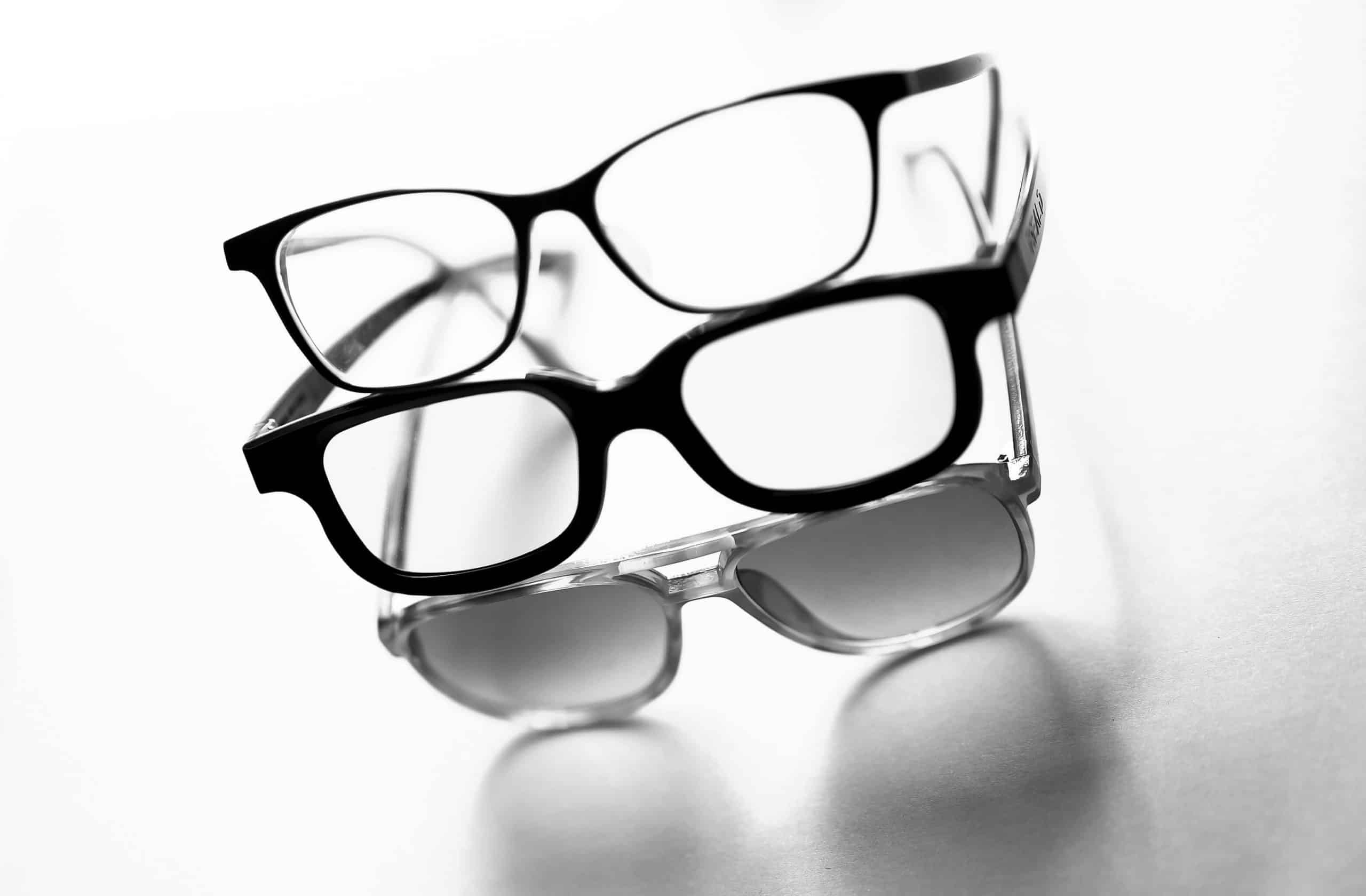
Three pairs of glasses representing the different types of varifocal lenses.

With so many types of varifocal lenses, how do you know which to choose? Photo by che madelar on Unsplash

Do you have a different pair of glasses for every situation? Varifocals replace multiple pairs of glasses by combining long, intermediate and near vision in one lens. But which type is best for you? Don’t worry, help is at hand with our guide to the different types of varifocal lenses.

Why are there so many types of varifocal lenses?

Varifocals were invented in 1959. Since then, lens technology has progressed, leading to a wide range of improved varifocal lenses on the market. When varifocals first appeared, standard moulds meant opticians could only offer limited customisation. These days, freeform digital technology can customise lenses precisely to your prescription.

Freeform varifocal lenses: not your grandpa’s varifocals

Modern computers can shape bespoke lenses for different people with different needs. These “freeform” lenses solve some of the problems of earlier varifocals. For example, they offer smoother transitions between the viewing zones and less distortion at the sides of the lens. In the same way a TV from 1959 wouldn’t be as clear as a modern HD TV, varifocals continue to get better and better. Read about getting used to varifocals here.

Occupational varifocals

Of course, “better” depends on what you need from your glasses. Standard freeform varifocals provide a good balance of near, intermediate and distance vision for daily life. They should also give you a clearer and wider field of vision than Grandpa’s varifocals from 1959. But if you spend a lot of time working at a computer (for example), you may need glasses that prioritise the intermediate distance more. That’s what occupational lenses offer. Read more about occupational lenses here.

Specialist varifocals and driving glasses

You can now buy varifocals optimised for a range of activities. Driving lenses are a popular option. They have wider long distance and intermediate zones for long hours on the road while still helping you see your dashboard.

Varifocal sunglasses

Yes, you can get varifocal sunglasses! You can even buy photochromic (colour-changing) lenses or polarised options that limit glare. The combination you choose depends on your needs and budget.

How much do varifocal lenses cost?

Freeform varifocals are the new standard, and most brands offer a range of price points. Typically, you pay more for a higher quality lens, and for customisations such as tints and lens coatings. We use high-quality freeform digital varifocals, which come in Digital Silver, Digital Gold and Digital Platinum options. Our prices for Digital Silver lenses (our cheapest varifocal) start at £90. We pass savings onto our customers by replacing the lenses in their existing frames, and by doing most of our work in-house or locally. See our prices here. So, is it worth paying more for premium varifocals? That depends on your budget and needs. Premium varifocals offer a wider intermediate vision zone, with smoother transitions between distances and less distortion.

Which are the best types of varifocal lenses?

There’s a huge range of high-quality varifocal lenses on the market today, which are much better than the lenses available in the past. Different brands offer different selling points, so it’s best to consider what you actually need. Premium lenses with less distortion are easier to get used to but cost more. Specialist lenses reduce eye strain for certain tasks but aren’t designed to be worn all day.

Top tips:

  • Customisation is only as good as the measurements provided. Make sure you get an accurate prescription plus pupil height and distance measurements for your varifocals.
  • As prescriptions change and technology improves, it’s worth renewing your varifocals every few years.

FAQs

What is the average age for varifocals?

Most people won’t need to consider varifocals until they are in their 40s. This is because varifocals correct long-sightedness that begins in middle age (presbyopia).

Can you adapt the corridor length of varifocals for a customer?

Yes. Freeform varifocals come in different corridor lengths, and we can recommend the option that best suits your needs. Accurate measurements, especially your pupil height, help ensure the right fit.

Do office lenses have distorted soft-focus areas like in varifocal lenses?

Office lenses are designed to reduce distortion at the edges of the intermediate zone, giving you a wider field of view.

Voracious for varifocals?

You can save money by replacing the lenses in your existing frames. We’ll just need your prescription, pupil height and pupillary distance measurements. We can advise you on the different types of varifocal lenses and help you choose the best ones for you. Send us your glasses to reglaze now.

How to Get Used to Varifocals: Practical Tips From Real People

A man in a white shirt rubbing his tired eyes while holding his glasses, illustrating the discomfort people can feel when trying to get used to varifocals.

Tired eyes? It takes time to get used to varifocals. Photo by Towfiqu Barbhuiya on Unsplash.

Are your varifocals making you dizzy or giving you a headache? You’re not alone. Getting used to varifocals can take some time. So how do you know whether there’s a problem with your new varifocal lenses or if you just need time to adjust? We asked some varifocal wearers – and our in-house expert, Mr Patel – for their tips on how to get used to varifocals.

Common problems with varifocal glasses

Adjusting to any new pair of glasses takes time, but getting used to varifocals can be particularly tricky. Your eyes need time to get used to refocusing as they switch between different prescription strengths within the same lens. The soft-focus zones at the sides of varifocal lenses narrow your peripheral vision slightly, meaning you need to move your head more. Common teething problems with varifocal lenses include:
  • Dizziness
  • Headaches
  • Tired eyes
  • Trouble with balance and depth perception
Luckily, most people fully adjust, and these problems are only temporary.

How long does it take to get used to varifocals?

Many people get used to new varifocal lenses within a week. For others, it may take longer. Richard, from Wiltshire, has been wearing varifocal glasses for 12 years. He doesn’t remember any issues with his first pair of varifocals, but his most recent pair took about a week to “bed in”. He sometimes felt a bit dizzy at first. Now, he wears them all day and barely notices them. “Once your eyes know what they’re doing, you don’t know you’re wearing them.” Andrea, from Yorkshire, has been wearing varifocals for 10 years. When she first started, she noticed a bit of fuzziness when walking and looking at the ground. It just took her a few days to get used to this, but closer to a month to get used to the soft-focus zones at the sides of the lenses. These experiences are typical of many varifocal first-time wearers.

Are varifocals worth it?

If you’re willing to go through the adjustment period, varifocal lenses have some great benefits. You can see a range of distances without needing to change your glasses. Andrea says she wouldn’t go back to single-vision lenses, even though they’re cheaper. With varifocals, she doesn’t have to remove her glasses constantly to see papers and the computer screen at work. Richard tried varifocals after realising he was balancing his reading glasses on the end of his nose while driving. Now, he can switch between the dashboard and the road ahead safely, without having to peer over the top of his glasses. He’s also found varifocals useful for other activities where he switches between close-up and mid- to long-distance vision, such as fly fishing. Not sure if varifocals are right for you? Check out our guide to Bifocal Vs. Varifocal lenses.

Expert tips on how to get used to varifocals

So, maybe you’ve decided to commit to varifocals, but how can you speed up the process of getting used to them? Mr Patel from LensXpress offers this advice: "Wear your varifocals regularly, move your head to focus, not your eyes, and give yourself time to adjust." The more you wear your new varifocals the first few days after you get them, the quicker you’ll adjust. However, if varifocals affect your depth perception, avoid wearing them for risky activities until your eyes have adapted. If you still struggle after a few weeks, speak with your optician to check that your prescription or lens fitting is correct.

Things to consider when buying varifocals

Because of the different powers within a varifocal lens, it’s important that the right part of the lens sits over your pupil. For this reason, depending on the type of lens, you may need to give some measurements, such as your pupil height and pupillary distance. According to a recent Which? report, some retailers don’t always take these measurements into account, so check carefully. You can find out your pupillary distance from a registered optician or use our simple guide. It’s also worth thinking carefully about which type of varifocals to choose. Modern digital (freeform) varifocals have a wider field of view than traditional varifocals, making it easier for you to adapt. This is the type we sell at LensXpress. Some varifocals are designed specifically for certain situations, such as the workplace. Read more about occupational lenses.

Ready to give varifocals a try?

Did you know you can replace the lenses in your existing frames with varifocals? At LensXpress, we reglaze glasses, meaning you can get new lenses and keep your old frames, saving you money. Interested? Send us your glasses to reglaze now.
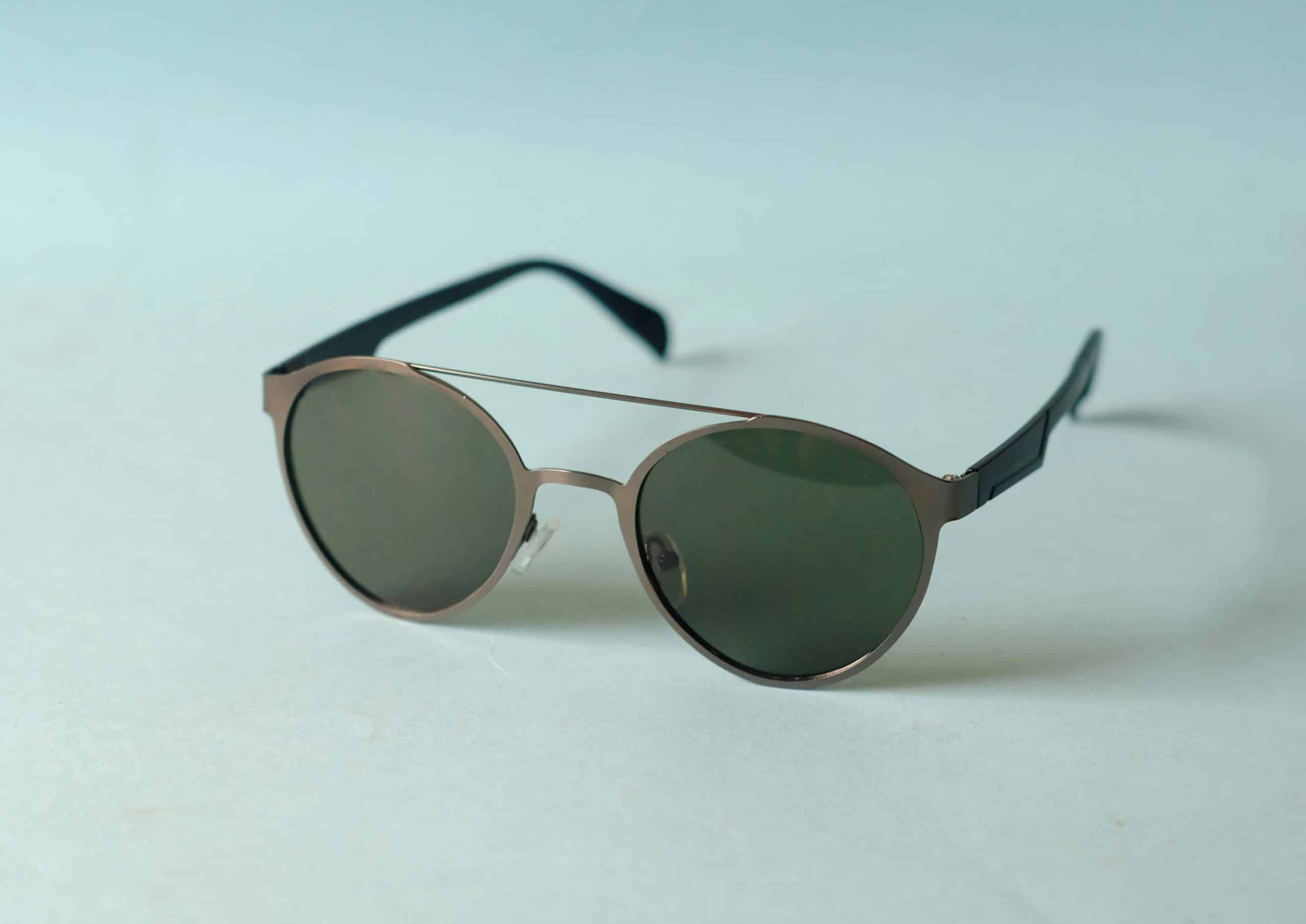
“I’ve been through three sets of varifocals from different providers, and these are the only ones that have worked perfectly for me straight out of the box. The optician clearly took precise measurements, and the glasses fitted perfectly when they arrived - no adjustments needed whatsoever.”—S. Patel
If you're considering upgrading, our post on 3 Reasons Why It's Worth Reglazing Your Glasses explains why replacing the lenses in your current frames can be a smart choice.

What Are Occupational Lenses (and do you need them)?

Do you need laser-sharp vision to do your best work? Occupational lenses are a special type of varifocal lens. They’re designed to help you see clearly for tasks that rely on having a good balance of near and intermediate vision, like office or lab work.
Silhouette of the side of someone's face and occupational glasses in front of a computer screen.

Specialist lenses can help your eyes to focus when you use a screen. (Photo by Enrique Alarcon on Unsplash.)

What’s the difference between varifocals and occupational lenses?

Both varifocals and occupational lenses include different prescription strengths within the lens. This lets you see clearly at various distances without changing your glasses. Ordinary varifocals are for everyday use, while occupational lenses are for specific tasks. In standard varifocals, the top section helps you see far away, the middle covers intermediate distance, and the bottom is for close-up work. The sides have “soft-focus” areas that help your eyes adjust. These soft-focus zones mean that the intermediate distance view is narrow, so you have to move your head more to see at these distances. Occupational lenses expand the near and intermediate zones because these are the distances you use most often at work.

Imagine you’re a spy…

When you’re out on a mission, you wear varifocals. They help you to see a range of distances, from decoding a secret message, to a high-speed chase, to making eye contact with an undercover agent across the bar. There’s no need for you to carry more than one pair of glasses around (unless it’s for a disguise). But recently, you’ve been put on desk duty. Long hours at the computer are starting to take a toll on your eyes. Suddenly, those versatile varifocals aren’t meeting your needs. You decide to investigate occupational lenses specialising in the types of activities (“occupations”) you now spend most of your time on.

Common types of occupational glasses

  • Office glasses (AKA computer glasses): ideal for reading, computer work and talking to colleagues/fellow spies. See prices for our office lenses.
  • Enhanced reading glasses: perfect for coffee chats, as you can see your friends when you look up from your book!
  • Task-specific lenses: customised lenses for tasks such as dentistry, music, industrial or lab work.

Other types of specialist lenses

As well as occupational lenses, you can buy other types of specialist lenses for particular tasks. For example, we offer a range of driving lenses. These give you a better field of intermediate and distance vision.

Can you wear occupational lenses all the time?

Unlike varifocals, occupational glasses aren’t designed to wear all day. They’re more comfortable for specific tasks, like using a computer, but less comfortable for general use. They also might not be suitable for tasks they aren’t designed for – office glasses aren’t safe for driving.

How long does it take to get used to occupational lenses?

As with varifocals, there’s an adjustment period: a few hours to a few weeks. But since you’ll use occupational lenses for one main task, you may adapt faster.

What’s the difference between bifocal and occupational lenses?

Bifocal lenses have two distinct prescription strengths in the lens, separated by a visible dividing line. Occupational lenses are a type of varifocal, meaning they have a smooth transition between multiple prescription strengths within the same lens. Read more about bifocals vs varifocals here.

Are occupational lenses more expensive than varifocals?

Occupational lenses start at a similar price to varifocals. However, varifocals can replace the need for several pairs of glasses, so can be more cost-effective. See our prices for occupational and lifestyle lenses here.

Occupational lenses vs varifocal lenses: Which should you choose?

Feature Varifocal Lenses Occupational Lenses
Purpose All-round, everyday use Task-specific (e.g. office)
Comfort Wear comfortably all day Optimised for long periods on one task
Best for Switching between distances Focusing on one task for hours
Drawbacks Narrow intermediate zone Not suitable for all-day wear

Choosing the right occupational lens is all about priorities

Like a spy on a mission, you need the right gear for the job. Occupational lenses reduce eye strain when you’re focusing on one task. But if you complete lots of different tasks throughout your day, you might be better off with varifocals. It all depends on how you spend your day and which activities need your sharpest focus.

Need some occupational lenses for your next mission?

We can replace the lenses in your frames with high-quality occupational lenses. Send us your glasses to reglaze now.
Bifocal vs Varifocal Lenses: What’s the Difference (and Which Should You Choose)?

“Now, where did I put my glasses…?” Are you constantly switching between reading and distance glasses? Perhaps you’re wearing one pair, with another balanced on your head! If you’re tired of carrying different pairs of glasses around for different reasons (reading, driving, watching TV…) it might be time to get one pair that meets all your needs. Enter: bifocals and varifocals.

Hold on, what about single vision lenses?

Single vision glasses have lenses that match one, single prescription. For example, if you’re short-sighted, you might need prescription glasses for seeing things that are far away. Or, if you can’t see things up close, you might use reading glasses. Bifocals and varifocals come in when you need more than one pair of glasses. (Our eyesight changes naturally as we age.) You might have been short-sighted already and started using reading glasses in mid-life. You could have two pairs of glasses – one for reading and one for distance – or you could explore having a single pair of bifocals or varifocals.

What are bifocal lenses?

Bifocal glasses have a lens with two sections. The upper part of the lens is for seeing things that are far away, like when you’re driving or watching TV. The lower part of the lens is for seeing things that are close-up, like when you’re scrolling on your phone, or reading the small print before you sign your life away. With bifocal lenses, you can see which part of the lens is for near-distance. It usually looks like a half-moon at the bottom of the lens, with a clear division between the two prescriptions. Some people like this, as it’s easy to know when they are switching between distance and close-up. Others prefer a more gradual change, which leads us smoothly onto…

What are varifocal lenses?

Vari-what?! Varifocal glasses have a more gradual transition between near, intermediate and distance vision. The lens itself has a smooth surface, with no “line” between the different prescriptions. The top of the lens is for distance, the middle of the lens is for intermediate, and the bottom is for near vision. This follows the natural movement of your eye as it changes its focus. You should experience a smooth transition, rather than an abrupt change. Unlike their cousins, occupational lenses, varifocals are designed so that you can wear them all day. Varifocals are popular because of this seamless user experience, but they can take some getting used to.
Outline of a varifocal lens showing the soft-focus zones, superimposed over a woman kayaking to some karst islands.

Varifocal lenses move smoothly between prescription strengths and have soft-focus zones at the sides.

Bifocal vs varifocal lenses: A showdown…

So, the moment you’ve been waiting for. Should you choose varifocals or bifocals? Let’s weigh them up.
Feature Bifocal Lenses Varifocal Lenses
Vision zones Two areas: distance and near Smooth transition: distance, intermediate and near
Appearance Visible dividing line Seamless (no line)
Adjustment period Most customers adapt quickly May take a few days
Intermediate vision Not covered Included
Cost Usually cheaper (See prices) Usually costs more (See prices)
Best for Switching between reading and distance Everyday wear across all distances
 

Should you choose bifocals or varifocals?

So, are bifocal or varifocal lenses best for you? If you’re short-sighted but need reading glasses (and don’t want to splash out on varifocals), bifocal glasses might be the better option. If you struggle with near, distance and intermediate vision, and don’t like having a line across your view, you might want to try varifocals. The good news is, reglazing your glasses means anything you spend goes straight to the lenses, as you can keep your own frames.  

Ready to upgrade to bifocal or varifocal lenses?

Ditch those cheap reading glasses and get some lenses that do your vision justice. With bifocals and varifocals, it’s all about consolidation. No more juggling different pairs, balancing them on your head or losing them completely! Send us your glasses to reglaze now.

3 Eye-Opening Reasons It’s Worth Reglazing Your Glasses

A pair of circular glasses resting on a wall.

Cool frames? Keep them. Just replace the lenses. (Photo by Asim Alnamat.)

What does “reglaze glasses" mean? (Sorry, it’s nothing to do with doughnuts…)

Need new glasses but love your old frames? Did you know you can just replace the lenses? Reglazing your glasses means fitting new prescription lenses into your existing frames. It’s cheaper than buying a completely new pair of glasses and means you get to keep your signature style, with a vision upgrade to match. It’s fast, affordable and convenient to reglaze your glasses online, and kinder to the planet too. Save money. Waste less. See sharp, look sharp. Send us your glasses to reglaze online. Want to know if reglazing is right for you? Here are three great reasons to keep your old frames and just replace the lenses.

1) You have a new prescription, but you want to keep your old frames

Are you a prescription procrastinator? It’s not your fault. You already invested a lot of time, money and effort in your existing glasses frames. You might have bought a designer pair. You definitely dragged someone to the opticians while you tried on hundreds of frames and asked, “Do my eyes look big in these?” But now your vision’s blurry once more and you’re bumping into things all over again (Did you walk into a bar?) … What to do? Don’t replace, just reglaze! Give your damaged, outdated lenses a refresh and those trusty old frames a new lease of life.

2) You want to save money by getting new lenses for your existing frames

New glasses are expensive. But vision is priceless. For a sighted person, the brain gets 80 percent of its sensory information through the eyes, so it’s important to keep your prescription up to date. The NHS recommends you have an eye test every 2 years, as your vision can change over time. In a pair of glasses, it’s the lenses that do the heavy lifting, while frames are literally a supporting act. Reusing your old frames allows you to update your prescription regularly with new lenses, giving you the best bang for your buck. Our lenses start at just £25. Anything you pay on top of this is an upgrade to the lenses themselves, such as scratch resistant coating, blue light filter protection or thinner, high-index lenses. So you spend your money where it counts: on helping you see better.

Frequently Asked Questions

  • Is it worth reglazing your glasses? → Yes, if you like your old frames and want to save money.
  • How long does reglazing take? → We aim for 3-5 working days for lenses we have in stock and 7-10 working days for bespoke lenses.

3) You want to protect the environment by reusing your old frames

Have you ever thought about the environmental impact of your glasses? Did you know that frames are often thrown away before they even reach the shops, because of changes in fashion trends? Not to mention the waste plastic created in the manufacturing process. Replacing the lenses in your existing frames, rather than buying a completely new pair of glasses, cuts down on the materials used when you have a new prescription. Reglazing your glasses is a way of reusing the materials already in circulation. So it’s better for your world as well as your wallet.

Reframing the reglaze: Give your old frames new life!

There are lots of reasons to save your old frames from landfill: to save the earth, save money and keep that sophisticated style you worked so hard to discover. In our view, this means reglazing your glasses is totally worth it.

Ready to reglaze your glasses?

We reglaze most glasses in-house, allowing us to pass savings on to our customers and reglaze your glasses ASAP. Send us your frames today and our UK specialist will get in touch to help you choose the best lenses for your existing frames. Let’s start a reglaze craze! Request a postage pack
Back to Top
Product has been added to your cart

This website uses cookies to ensure you get the best experience on our website. More Info

MENU