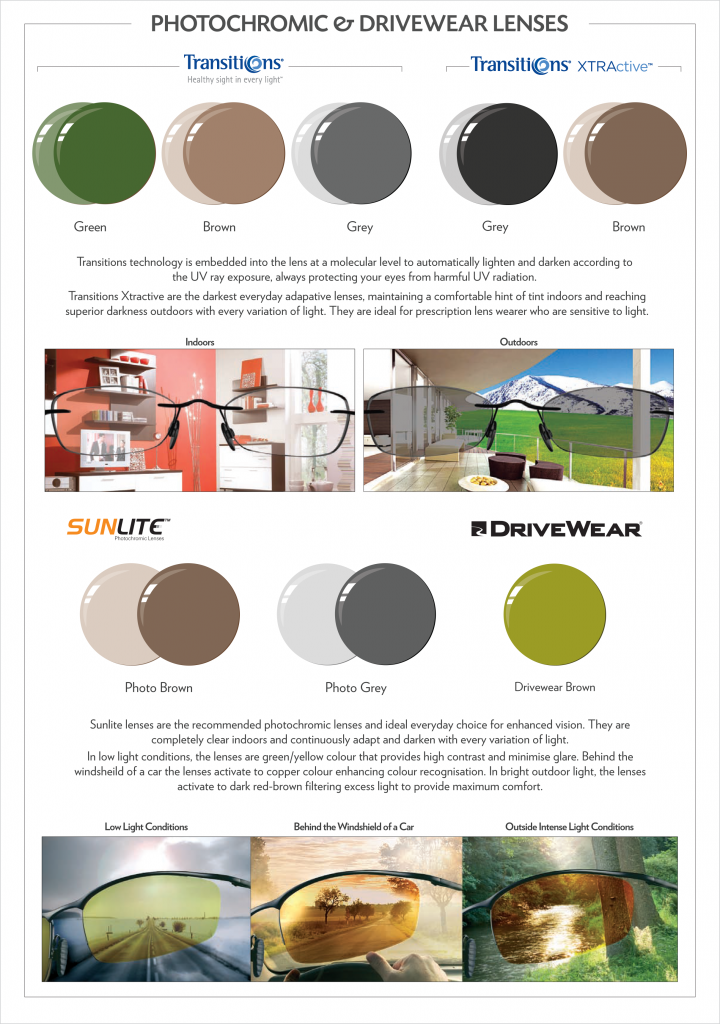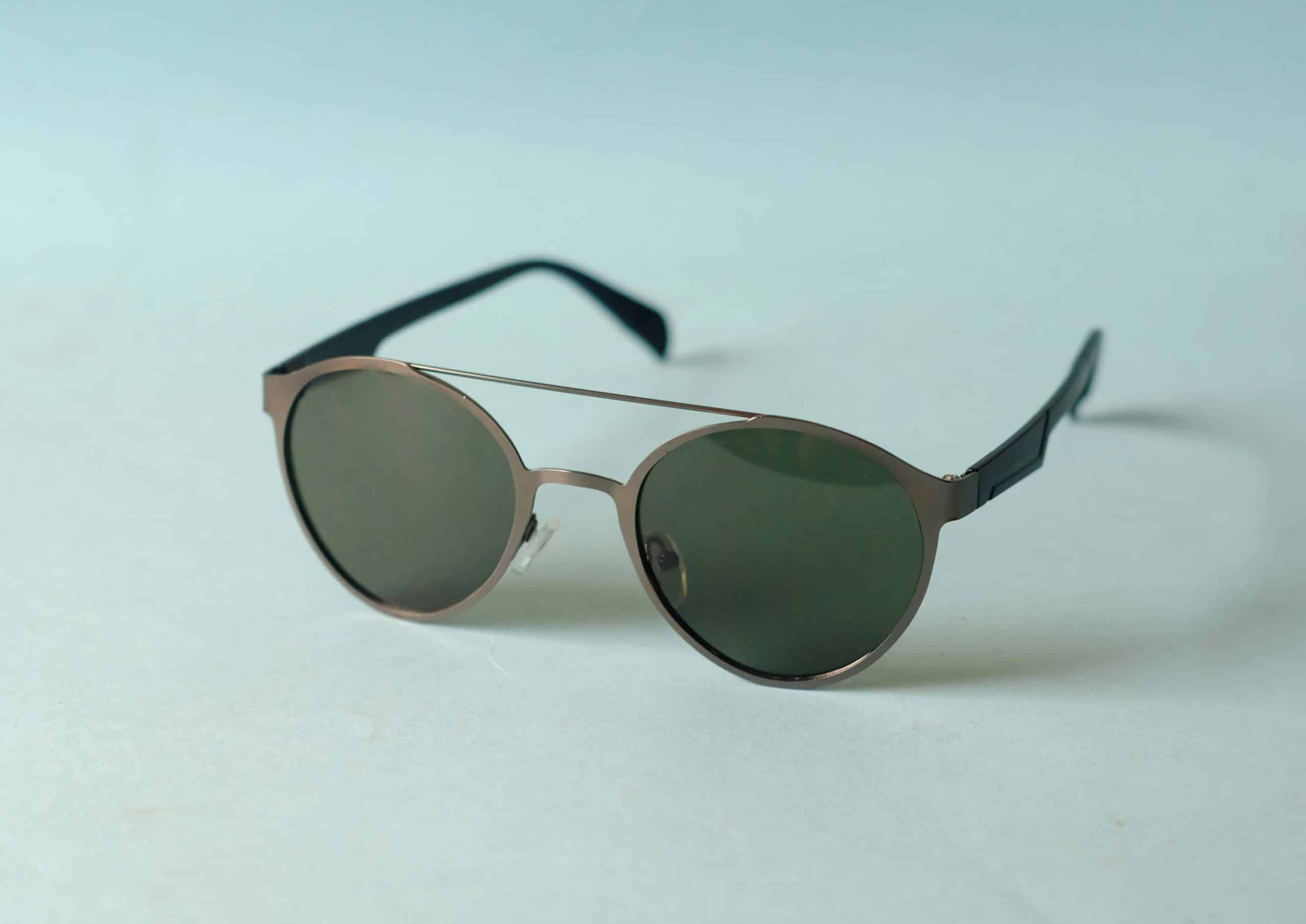
Photochromic lenses adapt to different light conditions. Photo by Redowan Dhrubo on Unsplash
Picture this: you’re on holiday somewhere nice and sunny. Naturally, to protect your eyes, you’re wearing your prescription sunglasses. But it’s so hot, your friends decide to escape indoors – into a cool, dark museum or café. That’s when you realise… you’ve left your glasses behind. You’ll be forced to suffer the indignity of wearing your sunglasses inside. How embarrassing! Maybe it’s time you tried photochromic lenses.
Also known as light-adaptive lenses, photochromic lenses get darker when conditions get brighter. In dark places, they turn clear, like normal glasses. It sounds like sorcery, but it’s science: the lenses contain molecules that change when they’re exposed to UV rays. So, prescription glasses and prescription sunglasses combined in one handy pair.
What’s the difference between photochromic and transition lenses?
Transitions® lenses are a well-known brand of photochromic lens. You know how some people call a vacuum cleaner a hoover? Well, Transitions® lenses have become the Hoover of the photochromic world: the market leader. (It helps that the word “transitions” is much easier to understand than “photochromic”.)
Transitions® photochromic lenses solve some of the problems of other types of photochromic lens. For example, unlike some other brands, Transitions® lenses still get darker in bright light when you’re in the car, even though the windscreen blocks out much of the UV light. Transitions® have also developed technology to make their lenses work well at different temperatures, solving another common issue.
Photochromic lenses vs. polarised lenses
Photochromic lenses get darker or lighter in different light conditions to protect your eyes from harmful UV radiation. Polarised lenses solve a slightly different problem: glare. Sorry, they don’t stop people giving you evil looks. But they do stop light reflecting off other surfaces (including the glasses lens itself) and dazzling you. Think rabbit in the headlights. To understand the equally dazzling science behind this, check out this SciShow video.
So, if switching between prescription glasses and sunglasses is a pain for you, choose photochromic lenses. If being dazzled by the ghostly halo of polarised light reflected in your glasses is more of a problem, choose polarised lenses. Or you can have your cake and eat it by getting both.
Photochromic lenses pros and cons
Let’s weigh up the advantages and disadvantages of photochromic lenses.
Advantages:
- No need to constantly switch between glasses and sunglasses, meaning you’re less likely to lose them.
- Protects your eyes from UV rays. You might not think to bring your sunglasses with you on a cold winter’s day, but with photochromic lenses you don’t need to. It’s like wearing sunscreen all the time.
- You don’t need to buy separate pairs of prescription glasses and sunglasses. Spend money on your holiday, not on your sunnies.
Disadvantages:
- It can take time for the lenses to get darker or lighter, meaning you may have a short period of time when the lenses are too dark or too clear.
- Some photochromic lenses don’t work well inside a car because the windscreen filters out the type of light that activates the photochromic molecules.
- Some photochromic lenses don’t work as efficiently in very hot or very cold weather conditions, as these also affect the way the molecules change shape.
How much do photochromic lenses cost?
Photochromic lenses are an add-on to your usual prescription lenses. Ours start at £60 (in addition to your overall lens price). You can make your prescription glasses photochromic whether you use single-vision, bifocal or varifocal lenses. So, it’s an added cost – but it’s cheaper than buying a new pair of prescription sunglasses.
We sell Transitions® brand or the more budget-friendly Sun-X Speed.
See our prices for single vision photochromic lenses.
Time to upgrade your glasses?
LensXpress replaces the lenses in your glasses with new ones. This way, you save money by keeping your old frames. Choose upgrades including photochromic lenses, polarising lenses and anti-reflective filters.
Invest in your eyes with clearer vision and protection in all light conditions.